Fast Days Healing Days

Category: Ask Dr. Varady

Fast Days Healing Days bring you the collected and selected pearls of ADF wisdom from Dr. Krista Varady, PhD, author of The Every Other Day (EOD) Diet, associate professor of kinesiology and nutrition at the University of Illinois at Chicago and leading alternate day fasting researcher.

  • Do Food Diaries Help Lose More Weight On EOD Diet?

    Do Food Diaries Help Lose More Weight On EOD Diet?

    [tabs slidertype=”top tabs”] [tabcontainer] [tabtext]Mar 16| 2014[/tabtext] [/tabcontainer] [tabcontent] [tab]THE EVERY OTHER DAY DIET

     

    ask-dr-varady-thumbnail

    “Should I keep a food diary while doing EOD?”

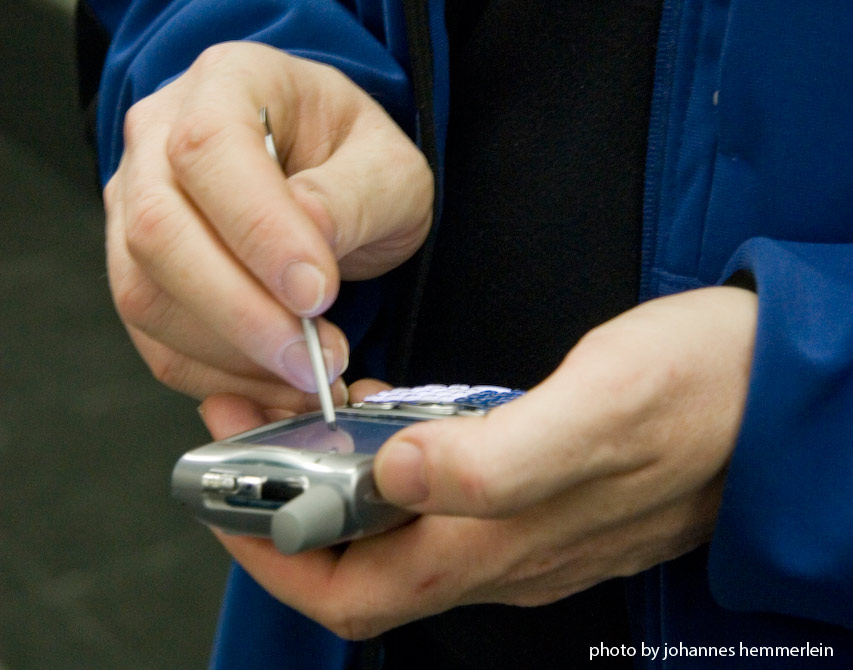
    I would definitely recommend keeping a food diary on diet days, particularly when you start EOD. Recent research suggest that people who keep food diaries can lose 30-50% more weight than people who do not keep food diaries. Using electronic/smart phone diaries have been shown to be better than paper journals (most likely because you always have it on you).

    As for the feast day, I would only recommend keeping a food diary if you are not losing any weight after a few weeks of EOD. Approximately 10% of our subjects overate on feast
    days and did not lose weight. However, when they started keeping track of their calories, the majority were able to lose a substantial amount of weight.

    Read the full abstract on Pub Med 

    [tab] [/tabcontent] [/tabs]


    Notes: We’ve personally seen the success Dr. Varady refers to regarding keeping food diaries. It’s easy to have portion distortion. We don’t do it intentionally or because we lack determination, will or honestly. But it’s often difficult to look at a serving and guess the true size or weight of something. Using a food diary, especially an electronic one encourages you to actually put in accurate weights and measures. Fast Days Healing Days prefers using a kitchen scale over cups or tablespoons. Some foods compact more than others (think about lettuce and spinach, probably no two cups are the same). Three ounce of romaine is three ounces of romaine when measured under the same conditions (same scale, same day with the same humidity, same lettuce and level of moisture content, etc). It just takes more variables out of tracking food numbers.

    The other great thing about keeping a food diary is that if you have to go to the trouble to write something down and “be accountable” for it, you often won’t–especially if it’s an un-planned bite or two of eighteen of food! We think food diaries aid accountability.

    The last thing food diaries do to help you lose more weight is they help identify trends. If you know this week, you’ve suddenly stopped losing weight, you can refer to the diary. You can see if you are eating new things or bigger quantities that may have an effect on weight loss. You can also look back to see the weeks where you sailed through easy-breezy and identify what foods you were eating then, what activities you participated in and you’ll know what you need to do to revamp your lifestyle to correct things and get back to losing.

    Two thumbs up for food diaries, Dr. Varady!

    Fast Days Healing Days is happy to answer generic questions about the EOD diet or alternate day fasting in the comments section of this post. To ask Dr. Varady a question regarding the EOD diet or this post, please visit her Facebook Fan Page and direct your questions to her. Be sure to visit Dr. Varady’s EOD Diet website.


    Add The Every Other Day Diet to your health and fitness library today. Please support our trusted partner, Amazon.com

  • HIIT (High Intensity Interval Training): Benefits With Weight Loss and Disease Risk

    HIIT (High Intensity Interval Training): Benefits With Weight Loss and Disease Risk

    [tabs slidertype=”top tabs”] [tabcontainer] [tabtext]Jan 15| 2014[/tabtext] [/tabcontainer] [tabcontent] [tab]THE EVERY OTHER DAY DIET


    ask-dr-varady-thumbnail

    “Is high intensity interval training more effective for weight loss and disease risk reduction when compared to aerobic exercise?”

    High intensity interval training (HIIT) involves repeatedly exercising at a very high intensity (90% heart rate maximum) for 30 seconds to several minutes, separated by 1-5 minutes of recovery (either no or low intensity exercise).

    Several studies indicate that HIIT may be more effective for lowering blood pressure, glucose and cholesterol levels when compared to aerobic training. Some studies even suggest that HIIT is easier to stick to when compared to aerobic exercise. Whether HIIT is better for weight loss and weight maintenance is not clear, however, since only a few studies have examined this.

    All in all, if this type of exercise interests you, I would suggest giving it a try. However, I would recommend that you first meet with a personal trainer to learn how to do this type of training correctly, since it’s a lot more complicated than regular aerobic exercise.

    [tab] [/tabcontent] [/tabs]


    Notes: That’s awesome information, Dr. Varady. Thanks!!


    Fast Days Healing Days is happy to answer generic questions about the EOD diet or alternate day fasting in the comments section of this post. To ask Dr. Varady a question regarding the EOD diet or this post, please visit her Facebook Fan Page and direct your questions to her. Be sure to visit Dr. Varady’s EOD Diet website.

  • Do EOD and 5:2 Help Lower IGF-1 Levels?

    Do EOD and 5:2 Help Lower IGF-1 Levels?

    [tabs slidertype=”top tabs”] [tabcontainer] [tabtext]Jan 15| 2014[/tabtext] [/tabcontainer] [tabcontent] [tab]THE EVERY OTHER DAY DIET


    ask-dr-varady-thumbnail

    Mark asks: “Do EOD and 5:2 help to lower IGF-1 levels?”

    IGF-1 (insulin-like growth factor-1) is a hormone that looks like insulin, and plays an important role in growth. High blood levels of IGF-1 are thought to be harmful, as they are correlated with aging and increased cancer risk.

    Recent findings from our lab show that 12 weeks of EOD helps to lower IGF-1 (when a person achieves at least 5% weight loss).

    A lot of people start 5:2 to lower their IGF-1 levels (since Michael Mosley lowered his using 5:2). In the study by Harvie et al., the effect of fasting on IGF-1 was tested. This study shows that fasting two consecutive days per week for 24-weeks has no effect on IGF-1 levels. I’m not sure, but is this finding discussed in the “Fast Diet” book? I’ve attached the Harvie et al. article here for those who are interested…

    Thanks for the great questions!

    Read the Harvie et al Study

    [/tab] [/tabcontent] [/tabs]


    Notes: Dr. Varady discusses in her book, The Every Other Day (EOD) Diet, that these types of questions are part of her mission in teasing out the effects of every other day dieting. For instance, she freely talks about the need for studies that help separate the actual effect of the fasting from the effects of losing weight. The idea is it’s possible the decrease in IGF-1 comes not from fasting but directly because of at least a 5% weight loss.

    From Fast Days Healing Days perspective, it’s  true that whether or not EOD, ADF, or 5:2 actually reduce IGF-1 through the diet’s mechanics, these diets provide powerful alternative lifestyles that offer help to many, resulting in thousands, losing 5% or more of their body weight and realizing health benefits as a result-including reducing IGF-1 levels.


    Fast Days Healing Days is happy to answer generic questions about the EOD diet or alternate day fasting in the comments section of this post. To ask Dr. Varady a question regarding the EOD diet or this post, please visit her Facebook Fan Page and direct your questions to her. Be sure to visit Dr. Varady’s EOD Diet website.

  • Concrete Fast Day Meal Examples

    Concrete Fast Day Meal Examples

    [tabs slidertype=”top tabs”] [tabcontainer] [tabtext]Jan 14| 2014[/tabtext] [/tabcontainer] [tabcontent] [tab]THE EVERY OTHER DAY DIET


    ask-dr-varady-thumbnail

    Sarah asks: “Can you please provide concrete examples of what we should be eating on the 500 calorie diet days?”

    Great question. As you’ve probably read in previous posts, I would recommend 70-80 grams of protein and plenty of non-starchy vegetables on diet day. I personally like to have a salad with chicken. I like that this meal is filling, it takes a while to eat, and it’s high in protein, fiber, vitamins and minerals. Just make sure you measure out your dressing though! Salad dressings are sneaky high-calorie foods. If you’re not into chicken, tuna is also a great option as this food is almost 100% protein.

    However, since everyone has different food preferences, we included dozens of 400-500 calorie meal options in the book (EOD Diet) (original recipes and prepared food items) to make diet days easier.[/tab] [/tabcontent] [/tabs]


    Notes: It’s sometimes hard to get in 70-80 grams of protein, especially in a single meal. Here are some common amounts of protein and serving sizes:

    8 ounces Roasted Chicken Breast, meat only without skin – 73 grams protein, 372 calories
    9 ounces Roasted Pork Tenderloin, meat only, no fat – 68 grams protein, 424 calories
    9 ounces Roasted Turkey Breast, meat only without skin – 67 grams protein, 444 calories
    8 ounces Roasted Beef Bottom Round, meat only, no fat – 62 grams protein, 497 calories
    12 ounces Boiled Shrimp, meat only, no shells – 71 grams protein, 337 calories
    10 ounces Sockeye Salmon, wild caught (raw weight) – 60 grams protein, 476 calories
    12 ounces Snapper, wild caught (raw weight) – 70 grams protein, 340 calories
    4 cups Egg Beaters – 76 grams protein, 400 calories
    6 large Eggs – 38 grams protein, 444 calories
    42 ounces Silken Tofu – 71 grams protein, 425 calories

    We are happy to share some of our near zero calorie Sauces and Dressings that make protein feel more satisfying.

    (Here’s a confession. On FD instead of following Dr. Varady’s protein recommendations which are very good recs, I try to get the CDC minimum requirement, which for me is between 46-60 grams per day. Remember the CDC number is a minimum, not an optimum! And protein requirements vary by individual based on LBM (Lean Body Mass), sex, age, activity, state of health, etc. It’s just easier for me to eat the CDC amount because I prefer the bulk of veggies and a bit of fat with less protein on Fast Days (it’s a personal preference). The CDC amount gives me enough calories leftover to add some beautiful, bulky low calorie and low glycemic index veggies into the meal with a bit of a sauce for flavor and a dash of healthy fats. Fast Days Healing Days is also working all the time to bring you new Meal Plans to help inspire you to create your own!


    Fast Days Healing Days is happy to answer generic questions about the EOD diet or alternate day fasting in the comments section of this post. To ask Dr. Varady a question regarding the EOD diet or this post, please visit her Facebook Fan Page and direct your questions to her. Be sure to visit Dr. Varady’s EOD Diet website.

  • Is Weight Fluctuation Normal?

    Is Weight Fluctuation Normal?

    [tabs slidertype=”top tabs”] [tabcontainer] [tabtext]Feb 15| 2014[/tabtext] [/tabcontainer] [tabcontent] [tab]THE EVERY OTHER DAY DIET


    ask-dr-varady-thumbnail

    Frances asks: “Is it normal to see 3.5lbs weight gain in a 24 hour period?”

    It’s typical for a person’s weight to fluctuate by 2-5 pounds each day.
    These changes occur because of daily water retention and the weight of
    the food in your gut. For most accurate results, weigh yourself in the
    morning before eating or drinking anything. As long as you are seeing
    consistent weight loss week to week, there is no need to be worried.[/tab] [/tabcontent] [/tabs]


    Notes: Yes, we’re big on waking, then potty, then nekkid weighing first thing in the morning. Every day.

    Dr. Varady discusses a study (will post that soon), that shows a correlation of greater weight loss/weight maintenance with daily weighing. We find, the lower glycemic we eat on UD (non-fast days), the smaller the weight bounce after an UD. But this diet (intermittent alternate day fasting aka EOD diet), as well as the 5:2 Fast Diet was never meant to include any form of calorie or macronutrient counting or deprivation on alternate, non-fast days.


    Fast Days Healing Days is happy to answer generic questions about the EOD diet or alternate day fasting in the comments section of this post. To ask Dr. Varady a question regarding the EOD diet or this post, please visit her Facebook Fan Page and direct your questions to her. Be sure to visit Dr. Varady’s EOD Diet website.

  • Getting Past the First Few Days Of Intermittent Fasting

    Getting Past the First Few Days Of Intermittent Fasting

    [tabs slidertype=”top tabs”] [tabcontainer] [tabtext]Aug 10 | 2013[/tabtext] [/tabcontainer] [tabcontent] [tab]THE EVERY OTHER DAY DIET


    ask-dr-varady-thumbnail

    The Early Days are the Most Difficult

    For those of you who are trying out the diet for the first time, please note that the first 10 days (i.e 5 fast days) are somewhat difficult. However, once you’ve passed this initial 10 day “hump” most people find the fast days rather easy to get through.

    What was your experience?

    [/tab] [/tabcontent] [/tabs]


    Notes: We definitely agree with Dr. Varady. The first few fasts are the most difficult. We believe that is because of “blood sugar roller coaster rides” as your body adjusts to a more balance blood sugar path–there might be highs and lows. It’s these “low” troughs that cause your body to beat you up, demanding food, “FEEEEEEEEEEDDDDDD MMMMMEEEEEEE, SEYMOUR!!!” But in most cases, this is your body and mind having temper tantrums and if you continue with your plan, they will subside and appear less often, with smaller and smaller ferocity.


    Fast Days Healing Days is happy to answer generic questions about the EOD diet or alternate day fasting in the comments section of this post. To ask Dr. Varady a question regarding the EOD diet or this post, please visit her Facebook Fan Page and direct your questions to her. Be sure to visit Dr. Varady’s EOD Diet website.

  • Weight Loss Stalls and Intermittent Fasting

    Weight Loss Stalls and Intermittent Fasting

    [tabs slidertype=”top tabs”] [tabcontainer] [tabtext]Feb 09 | 2014[/tabtext] [/tabcontainer] [tabcontent] [tab]THE EVERY OTHER DAY DIET


    ask-dr-varady-thumbnailWill weight loss during the Every Other Day Diet (EOD) reach a plateau after several months?


    Yes, some people have experienced weight loss plateaus after 4-6 months of EOD dieting. This also occurs in people that are in the range of normal weight. If this is happening to you, I would recommend adding another fast day to your week (resulting in 3 fast days in a row), as well as another exercise session (45 min). This has helped most people break through the plateau. Hope this helps!


    [/tab] [/tabcontent] [/tabs]


    Notes: Another point to consider is that weight loss is seldom linear, in a straight line. If you graph weight loss, it will most often look like a jagged, spikey stair step; sometimes down and sometimes up. Don’t be dismayed. When viewed over time, you will see that despite the jagged ups and downs, the over-all trend line is down and decreasing–indicating steady weight loss. Sometimes our bodies need to take time to catch up with the loss. We often perceive being “stalled,” because the empty fat cells with be filled with water (because they like to be full) and our bodies like balance…but after a while, your body will get the message and release the water, causing a “whoosh” or a big loss of 2-4 pounds, seemingly overnight.

    It’s also very important to take your measurements, first as a baseline when you begin intermittent fasting, then periodically (weekly or monthly). Often when you see no movement on the scale over a period of time, you will realize you’ve lost many inches. Tape measures and photos are your friend, because scales lie!

    We will be writing more about breaking a weight loss stall, soon. Please be sure to check back with us!

    How long was your longest stall?


    Fast Days Healing Days is happy to answer generic questions about the EOD diet or alternate day fasting in the comments section of this post. To ask Dr. Varady a question regarding the EOD diet or this post, please visit her Facebook Fan Page and direct your questions to her. Be sure to visit Dr. Varady’s EOD Diet website.

  • Tips – Fast Day Exercise Strategies

    Tips – Fast Day Exercise Strategies

    [tabs slidertype=”top tabs”] [tabcontainer] [tabtext]Jul 30 | 2013[/tabtext] [/tabcontainer] [tabcontent] [tab]THE EVERY OTHER DAY DIET

    ask-dr-varady-thumbnailDr. Varady’s Quick Tip:


    In a recent study, we found that people could exercise on the fast day, but lost more weight if they exercised in the morning rather than the afternoon.

    Why is this? People tend to have a hunger surge about 40 minutes after exercising. Thus, if you exercise in the morning on the fast day, you can eat your lunch shortly after training. In contrast, if you exercise in the afternoon, you’ll be more likely to cheat and grab a snack to sooth the hunger surge.

    [/tab] [/tabcontent] [/tabs]


    Notes: According to Dr. Varady, her research at the University of Illinois at Chicago shows you can turbocharge the EOD Diet with exercise. Be sure to read about it in Chapter 6 of The Every Other Day Diet. Dr. Varady’s research also shows that exercising helps build new healthy lifestyle habits and reshape our interaction with food. According to a Dr. Varady’s latest study, people who exercised were less likely to cheat or overeat on their Fast Days (FDs).


    Do you exercise as part of your intermittent fasting diet? If so, what kind of exercise do you do (cardio or weight lifting)? How many hours per week do you exercise?


    Fast Days Healing Days is happy to answer generic questions about the EOD diet or alternate day fasting in the comments section of this post. To ask Dr. Varady a question regarding the EOD diet or this post, please visit her Facebook Fan Page and direct your questions to her. Be sure to visit Dr. Varady’s EOD Diet website.


  • Is High Protein, High Fat or High Carb Better for Weight Loss?

    Is High Protein, High Fat or High Carb Better for Weight Loss?

    [tabs slidertype=”top tabs”] [tabcontainer] [tabtext]Feb 09 | 2014[/tabtext] [/tabcontainer] [tabcontent] [tab]THE EVERY OTHER DAY DIET


    ask-dr-varady-thumbnailHave you seen any difference in the effectiveness of the diet when eating high protein or low glycemic foods versus carbs?

    At this point, we have only examined whether the diet works when eating high fat foods. Results from this high fat study indicate that people  can lose just a much weight while eating high fat foods on diet days and feast days, as compared to eating low fat foods on these days. These  findings are described in detail in the book. Whether these same effects are noted with a low glycemic diet or high protein diet, have not yet been tested, but we hope to do so soon.


    [/tab] [/tabcontent] [/tabs]


    Notes: Dietary preferences are highly individual. Just because I love okra, does not mean you will, or your neighbor will, and so on. An important step in transforming any diet into a lifestyle is evaluating your thoughts, preferences and how the diet fits or dovetails to your satisfaction level with the diet and your life while following the diet. What does this mean? Well it means you want a diet to be part of a lifestyle change, not a “quick fix it and forget it” thing. You want to make sustainable choices. (ie Just because I choose to add low carb to ADF, and can make a sustainable, long-term change to low carb, doesn’t mean it’s right for you or will be sustainable long-term. Cutting out breads, pastas, potatoes and rice may be too restrictive for you and lead to bingeing or diet dissatisfaction, causing your lifestyle change to fail. So you must know what works for you!)

    Ask yourself, do you “feel” better on a high fat diet? Do you feel better on a low fat diet? The Atkins folks seem very convinced that the combination of high fat in conjunction with high carb could be a lethal duo for many because it may lead to poor blood lipid profiles, increased insulin production, increased blood sugar and increased inflammatory markers. What I take from that, according to Drs. Weston, Phinney, and Volek, authors of the newer generation of Atkins books and even Dr. Atkins himself, is if you are going to eat a high carb diet, then you should keep fats low–maybe no higher than 30%. If you choose to eat a high fat diet, then you really need to keep those carbs very low (somewhere less than 50-60g of daily net carbohydrate for most people.

    And remember, with a 500 FDB (fast day budget), you’ll get less food quantity or volume eating a high fat diet, but will have a higher food volume eating “lower” fat–because fat has more calories per gram than protein or carbohydrates. Fat has 9 calories/gram and protein and carbs have 4 calories/gram. However, many people report greater satiety and diet satisfaction when eating a high fat/low carb or lower carb diet.

    Which do you prefer, low fat or high fat? Are you a volume eater? We want to hear from you! It will help us determine the types of recipes you prefer. Thanks!


    Fast Days Healing Days is happy to answer generic questions about the EOD diet or alternate day fasting in the comments section of this post. To ask Dr. Varady a question regarding the EOD diet or this post, please visit her Facebook Fan Page and direct your questions to her. Be sure to visit Dr. Varady’s EOD Diet website.

  • What Is The Every Other Day Diet?

    What Is The Every Other Day Diet?

    [tabs slidertype=”top tabs”] [tabcontainer] [tabtext]Jul 30 | 2013[/tabtext] [/tabcontainer] [tabcontent] [tab]THE EVERY OTHER DAY DIET


    ask-dr-varady-thumbnailWhat is the Every Other Day diet?

    It’s quite simple: It consists of a “diet day” where you eat a 500 calorie lunch only, alternated with a “feast day” where you eat whatever and whenever you want.

    Recent studies from our lab show that people can lose between 10-30 pounds in 8 weeks! [/tab] [/tabcontent] [/tabs]


    Notes: Dr. Varady also says that if you are having trouble eating all of your calories at one meal, you can have a small 50-100 calorie snack and a slightly smaller main meal. Their research shows the fewer meals eaten, the better the response to the diet, especially in terms of weight loss. It’s very easy to succumb to portion distortion and to inadvertently underestimate the number of calories consumed. The smaller the number of meals, the smaller the possible error, ensuring that you hit your targeted “magic number” as discussed in Chapter 1 of The Every Other Day Diet.


    What type of intermittent fasting do you practice? Are you 5:2, 4:3 (aka EOD or ADF), or another plan? Drop us a comment and let us know! Looking forward to hearing from you.


    Fast Days Healing Days is happy to answer generic questions about the EOD diet or alternate day fasting in the comments section of this post. To ask Dr. Varady a question regarding the EOD diet or this post, please visit her Facebook Fan Page and direct your questions to her. Be sure to visit Dr. Varady’s EOD Diet website.


Protected By
Shield Security PRO